
San Diego County Traffic Tickets
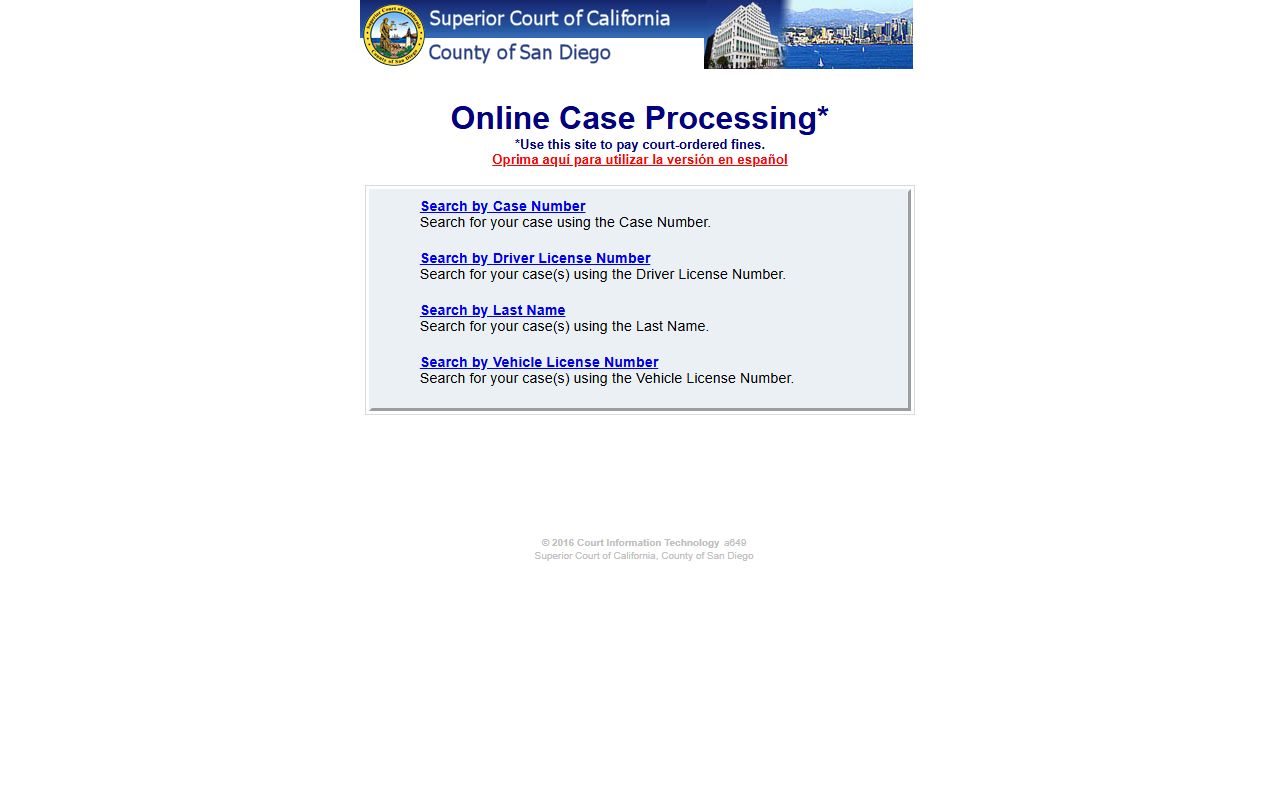
San Diego County traffic tickets are handled by the Superior Court of California, County of San Diego. This court serves more than three million residents across 4,200 square miles. When a law enforcement officer writes you a traffic ticket in San Diego County, your case will be heard at one of the court's traffic divisions. You can search for your citation online, pay your fine, or request a trial through the court's web portal. San Diego County uses an Odyssey case management system that lets you look up traffic cases by citation number or license plate. The court also runs a separate payment portal for those who want to pay traffic fines online.
San Diego County Quick Facts
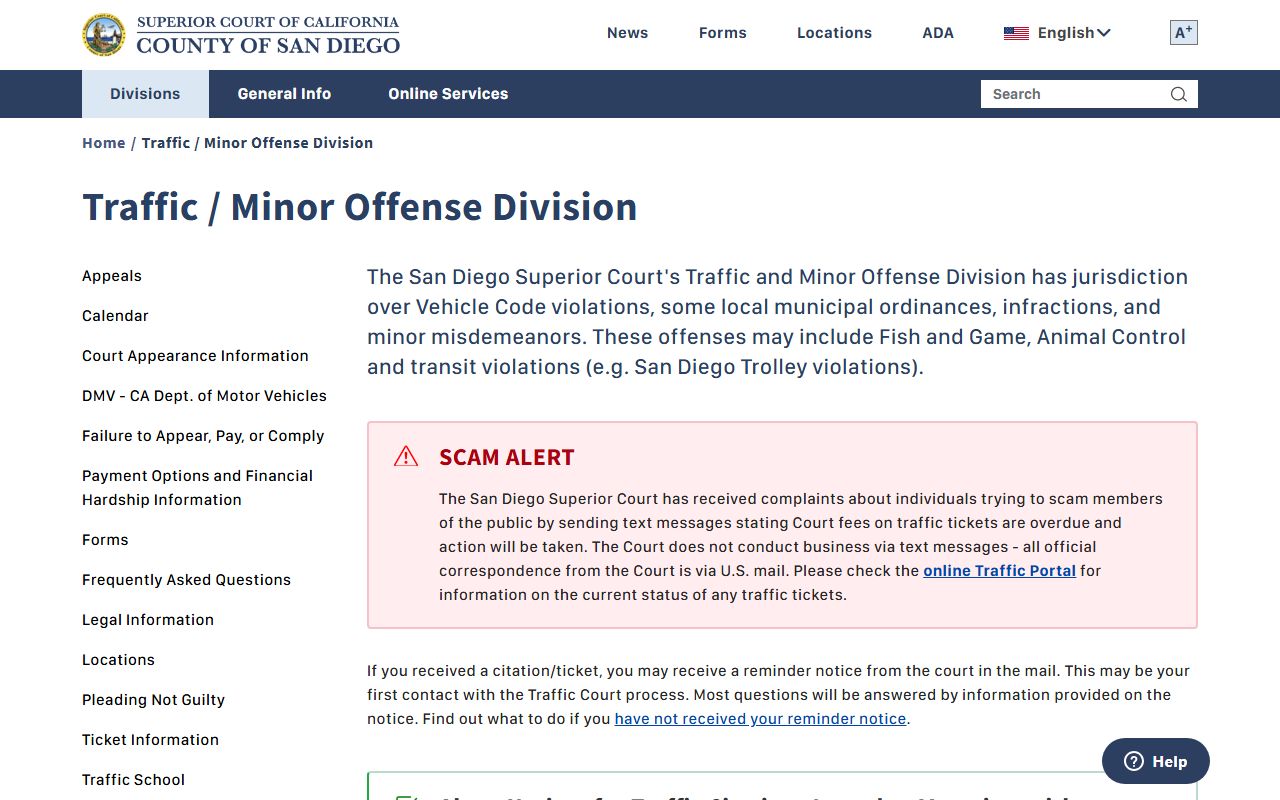
San Diego Superior Court Traffic Division
The San Diego Superior Court runs all traffic ticket cases in the county. Each court site has a traffic division that hears moving violations. These include speeding, stop sign tickets, cell phone use, and red light tickets. The court in Kearny Mesa sees the most traffic tickets in San Diego County. Other branches serve East County, South Bay, and North County areas.
To handle your San Diego traffic ticket, you must deal with the court site named on your citation. Most citations tell you which court branch to go to. If you got a ticket in the City of San Diego, your case may go to the Kearny Mesa or Downtown court. If you were cited in Chula Vista, your case goes to South County. East County sites serve cities like El Cajon and Santee. North County courts handle cases from Oceanside, Vista, and Carlsbad. Each site has the same rules and fee schedule for traffic tickets in San Diego County.
The main San Diego traffic ticket page is at sdcourt.ca.gov. This site lists all court branches and their hours. You can find maps to each site and phone numbers for each office. The court does not accept phone payments for traffic tickets in San Diego County. You must use the online portal or mail a check to pay your fine.
| Main Phone | (858) 643-1800 |
|---|---|
| Kearny Mesa Branch |
8950 Clairemont Mesa Blvd San Diego, CA 92123 |
| Hours | Monday through Friday, 8:00 AM to 4:00 PM |
| Website | sdcourt.ca.gov |
Search San Diego Traffic Tickets Online
San Diego County gives you two ways to search for traffic tickets online. The first is the Odyssey Portal. The second is the Online Payment System. Both are run by the San Diego Superior Court. Each one has a different use, so pick the one that fits what you need.
The Odyssey Portal lets you search for your traffic case by citation number, license plate, or name. Go to portal.prod2.odyssey.sdcourt.ca.gov to use this tool. You can see the charge, due date, and amount owed. The portal also shows past court dates and any notes from the judge. This is the best way to get details about your San Diego traffic ticket case. It does not cost money to search on this site. You can view your traffic ticket info at any time.
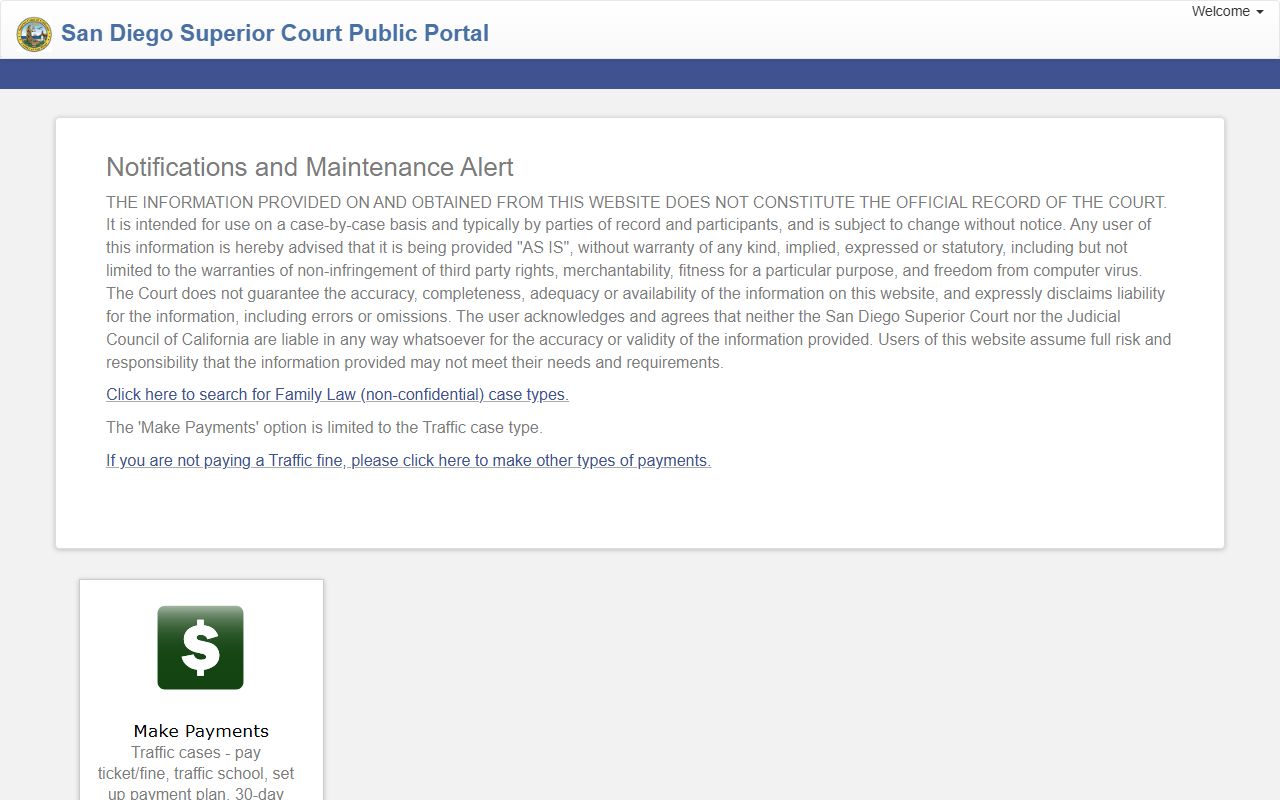
The Online Payment System at ops.sdcourt.ca.gov is where you pay your fine. You can pay with a card or bank account. The site adds a small fee for card use. Bank account payments cost less. You need your citation number to pay on this site. Type in the citation number and follow the steps. The court will send you a receipt by email. If you already paid at a court window or by mail, you can check the status on this site.
You must handle your San Diego County traffic ticket by the due date on the citation. If you miss the date, the court will add a $100 civil assessment. You may also get a hold on your license. To avoid these problems, act before the due date. You can pay online, ask for more time, or request a trial. All of these options are open until the due date passes.
What to Do with a San Diego Traffic Ticket
When you get a traffic ticket in San Diego County, you have a few choices. You can pay the fine, which means you plead guilty. You can ask for a trial if you think you are not guilty. Or you can go to traffic school if you are eligible. Each choice has different results and steps in San Diego County.
Paying the fine is the fastest way to close your traffic ticket case in San Diego County. You admit guilt when you pay. The court reports the ticket to the DMV. Your driving record will show the violation. This can make your insurance cost go up. To pay, use the online portal at ops.sdcourt.ca.gov or mail a check to the court site on your ticket. Make sure you pay by the due date. Late payments get a $100 civil assessment added to your total in San Diego County.
If you want to fight your traffic ticket, you must ask for a trial. San Diego County offers two trial types. One is a court trial where you go in person. The other is a trial by written declaration. With a written declaration, you mail in your case and the judge reads it. You do not have to go to court. The form is on the San Diego court website. You must still pay the bail amount when you ask for a trial, but you get it back if you win. If you lose, the bail goes toward your fine for the traffic ticket in San Diego County.
Traffic school is a way to keep a point off your record in San Diego County. You still pay the fine and a traffic school fee. But the DMV does not put a point on your license. This keeps your insurance rate from going up. You can only do traffic school once every 18 months. You must ask the court for permission before you sign up. Not all tickets qualify for traffic school in San Diego County. Some serious charges like DUI or reckless driving do not allow traffic school.
San Diego County Traffic Ticket Fines
Traffic ticket fines in San Diego County depend on the type of violation and your driving record. A basic speeding ticket can cost a few hundred dollars. More serious charges cost more. The fine amount includes the base fine set by state law and extra fees added by the county and state. These extras can double the cost of your traffic ticket in San Diego County.
A speeding ticket in San Diego County starts at $35 for 1 to 15 mph over the limit. But after you add court fees and state charges, the total can reach $238. Speeding 16 to 25 mph over costs around $360 total. Over 26 mph can cost $490 or more. Cell phone tickets cost about $162 for a first offense. Stop sign and red light tickets run around $238. Seat belt violations start at $162. Each of these amounts can change based on added fees and your prior traffic tickets in San Diego County.
If you do not pay your traffic ticket by the due date, San Diego County adds a $100 civil assessment. This is a penalty for late payment. The court can also add more fees if you do not show up for a court date. These fees can make your traffic ticket cost twice as much. To avoid these charges, handle your ticket before the due date. Pay, ask for more time, or request a trial. The court will not waive the civil assessment once it is added to your case in San Diego County.
Note: Traffic fines and fees can change at any time, so check the court website or call for the current amounts in San Diego County.
Request More Time in San Diego County
If you need more time to handle your traffic ticket, you can ask the San Diego Superior Court for an extension. This gives you a new due date. You do not have to pay right away. Extensions help if you need to save money or find time to take traffic school in San Diego County.
To get an extension, log in to the Odyssey Portal at portal.prod2.odyssey.sdcourt.ca.gov and look up your case. Click on the option to request more time. The court may give you 30 to 60 extra days. Some cases can get a second extension if you ask before the new due date. Extensions do not cost extra in San Diego County. But you must make your request before the first due date passes. Once you miss the due date, the court cannot give you an extension and will add a civil assessment to your traffic ticket.
You can also call the court at (858) 643-1800 to ask for more time. Have your citation number ready when you call. The clerk can tell you if your case is eligible for an extension. Not all traffic tickets in San Diego County can get extensions. Some charges require you to go to court by a set date. The clerk will let you know if your case qualifies.
Traffic School in San Diego County
Traffic school can keep a point off your driving record after a traffic ticket in San Diego County. You take a class and pass a test. Once you finish, the DMV does not add a point to your license. This can save you money on car insurance. But you still pay the fine and a traffic school fee in San Diego County.
To do traffic school, you must meet a few rules in San Diego County. You can only go once every 18 months. Your ticket must be for a moving violation that qualifies. You cannot have a commercial license. And you must not have been speeding more than 25 mph over the limit. If you meet these rules, you can ask the court for traffic school. Do this before you pay your fine. Once you pay, you cannot change your mind in San Diego County.
San Diego County lets you pick any state-approved traffic school. Many are online. Online courses let you work at your own pace. You can log in and out as you need. Courses cost between $20 and $50. The court adds its own fee on top of that. You must finish the course by the due date on your ticket. The school sends proof to the court. Once the court gets the proof, your traffic ticket case closes in San Diego County.
The full list of approved traffic schools is on the DMV website at dmv.ca.gov. Pick a school that fits your needs. Some offer video courses. Others use text and pictures. Read reviews before you sign up. Make sure the school is licensed by the DMV. Unlicensed schools will not count, and you will have to take the course again in San Diego County.
Traffic Tickets and Your DMV Record
All traffic tickets in San Diego County get reported to the California DMV. The DMV adds a point to your record for most moving violations. Points stay on your record for three to ten years. Too many points can lead to license suspension. Insurance companies also check your DMV record and may raise your rates if you have traffic tickets in San Diego County.
You can get your DMV record online at dmv.ca.gov. The online record costs $2. A mail request costs $5. Your record shows all traffic tickets, accidents, and license actions. Check it once a year to make sure it is correct. If you see an error, you can ask the DMV to fix it. This is important if a traffic ticket from San Diego County was reported wrong.
Under California Vehicle Code 1808, the DMV must keep traffic ticket records for set times. Most tickets stay on your record for three years. Serious charges like DUI stay for ten years. After the time passes, the ticket drops off your record. But the San Diego Superior Court keeps its own records of your case. These court records do not go away. You can still look up old traffic tickets on the court website even after the DMV removes them from your driving record in San Diego County.
Failure to Appear in San Diego County
If you do not handle your traffic ticket by the due date, the San Diego Superior Court can charge you with failure to appear. This is a new criminal charge on top of your traffic ticket. It can lead to a warrant for your arrest. The court will also add a $100 civil assessment to your fine. Your license may be suspended until you clear the case in San Diego County.
To fix a failure to appear, you must go to the court or use the online portal to resolve the case. You will need to pay the original fine, the civil assessment, and any other fees. The court may let you set up a payment plan if you cannot pay all at once. Once you clear the failure to appear, the court tells the DMV to take the hold off your license. This can take a few days to update in the DMV system for your San Diego County traffic ticket.
Warrants for traffic tickets in San Diego County are handled by the sheriff. If you have a warrant, you can go to the court to take care of it. The clerk will help you clear the warrant. In some cases, you may have to see a judge. Bring money to pay your fines when you go. The court wants to close the case, so they will work with you to find a solution in San Diego County.
San Diego Traffic Court Locations
San Diego County has nine court sites that handle traffic tickets. Each one serves a different part of the county. The site you must use is listed on your citation. Do not go to a different court, or they will send you to the right one. Court hours are 8:00 AM to 4:00 PM on weekdays. No traffic court is held on weekends in San Diego County.
Key traffic court sites in San Diego County include:
- Kearny Mesa: 8950 Clairemont Mesa Blvd, San Diego, CA 92123
- Downtown: 220 West Broadway, San Diego, CA 92101
- South County: 500 Third Avenue, Chula Vista, CA 91910
- East County: 250 East Main Street, El Cajon, CA 92020
- North County: 325 South Melrose Drive, Vista, CA 92081
To find the court site for your traffic ticket in San Diego County, check the citation. It will list the court address and phone number. You can also call the main line at (858) 643-1800 to ask which site handles your case. The clerk can tell you the address and best way to get there.
Cities in San Diego County
San Diego County includes 18 cities that all use the San Diego Superior Court for traffic tickets. The court branch you must use depends on where you got your ticket. Some cities have their own court site, while others share a site with nearby cities.
Other cities in San Diego County include Oceanside, Carlsbad, El Cajon, Vista, Escondido, Encinitas, National City, La Mesa, Santee, Poway, San Marcos, Imperial Beach, Lemon Grove, Coronado, Del Mar, and Solana Beach. All of these use the San Diego Superior Court for traffic tickets.
Nearby Counties
These counties border San Diego County. If you got a traffic ticket near the county line, make sure you know which county has your case. You must handle your ticket in the county where you were cited.