
Traffic Tickets in San Francisco
Traffic tickets in San Francisco are processed through the San Francisco County Superior Court and issued by multiple agencies including the San Francisco Police Department, California Highway Patrol, and the San Francisco Municipal Transportation Agency. When you get a traffic citation in the city, the type of violation determines which agency issued it and how you handle payment or contest procedures. Court citations require responses through the Superior Court traffic division. SFMTA parking citations go through a separate administrative process. Both types of tickets can be searched and paid online. The city handles thousands of traffic and parking violations each month across all neighborhoods from the Financial District to the Sunset.
San Francisco Traffic Ticket Quick Facts
San Francisco Superior Court Traffic Division
Moving violations issued by police officers in San Francisco get filed with the Superior Court of California, County of San Francisco. The traffic division handles citations for speeding, red light violations, stop sign violations, and other Vehicle Code infractions. You must respond to these tickets by the due date shown on the citation. Options include paying the fine, requesting traffic school if eligible, or contesting the ticket through trial.
The San Francisco Superior Court Traffic Division provides comprehensive information about handling moving violations in the city and county. Their website explains court procedures, payment options, traffic school eligibility, and how to request a trial. Visit sf.courts.ca.gov traffic division to learn about resolving traffic citations through the San Francisco court system.
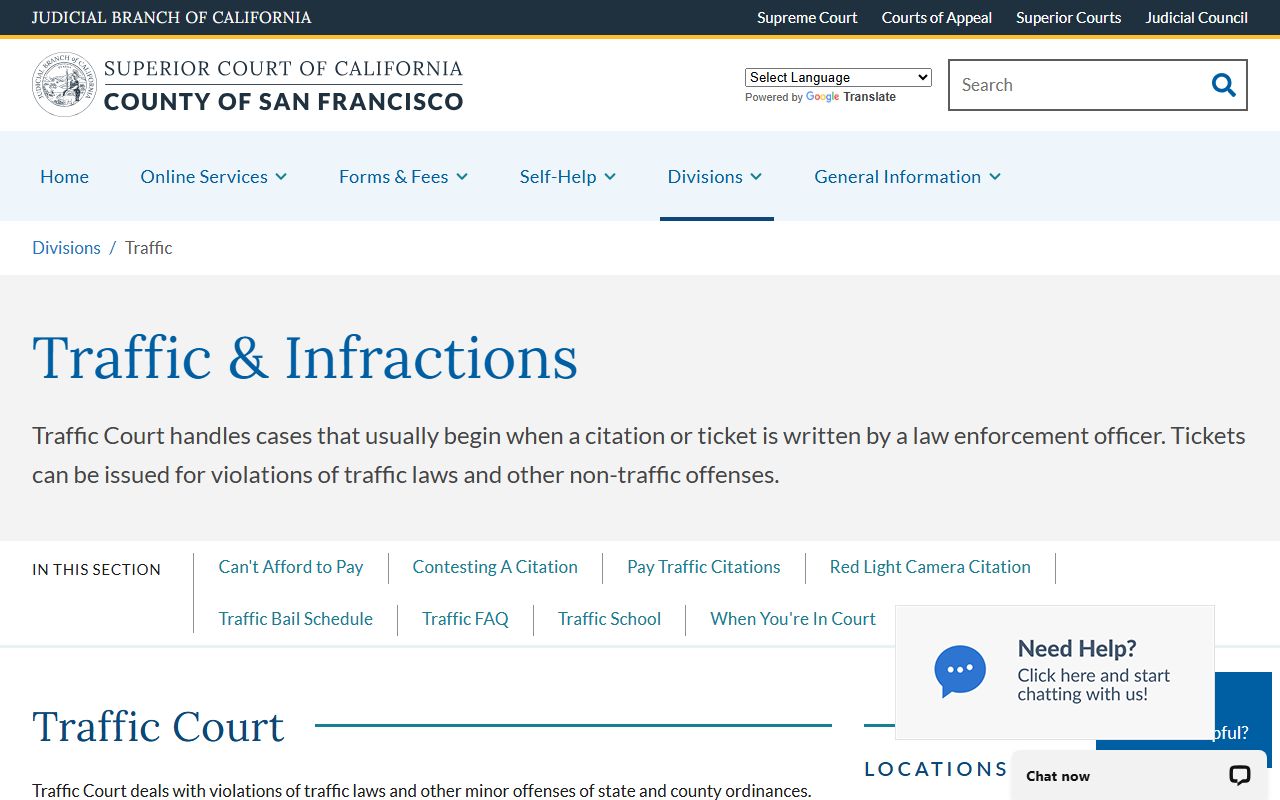
San Francisco is both a city and a county. The Superior Court serves the entire jurisdiction. Traffic courtrooms are located at the Civic Center Courthouse on McAllister Street. You can go in person during business hours. You can also handle most matters online or by mail. The court prefers electronic submissions when possible to reduce wait times and make the process faster for people across the city.
Wait about two weeks after getting your ticket before searching online. The court needs time to enter citations into the database. Searching too soon gives no results even though your ticket is valid. After the processing period, you can look up your case and see all available options for handling it in San Francisco.
San Francisco Police Department Citations
The San Francisco Police Department issues traffic citations for moving violations throughout the city. SFPD officers patrol neighborhoods, enforce speed limits, and cite drivers for various Vehicle Code infractions. When an SFPD officer gives you a ticket, it goes through the San Francisco County Superior Court system just like citations from CHP or other law enforcement agencies operating in the city.
The San Francisco Police Department maintains a detailed information page about vehicle citations and moving violations for people who received tickets in the city. The page explains what to do after getting a citation, where to find your citation number, and how to contact the court. Access SFPD citation guidance at sanfranciscopolice.org citations for help with traffic tickets issued by San Francisco police officers.
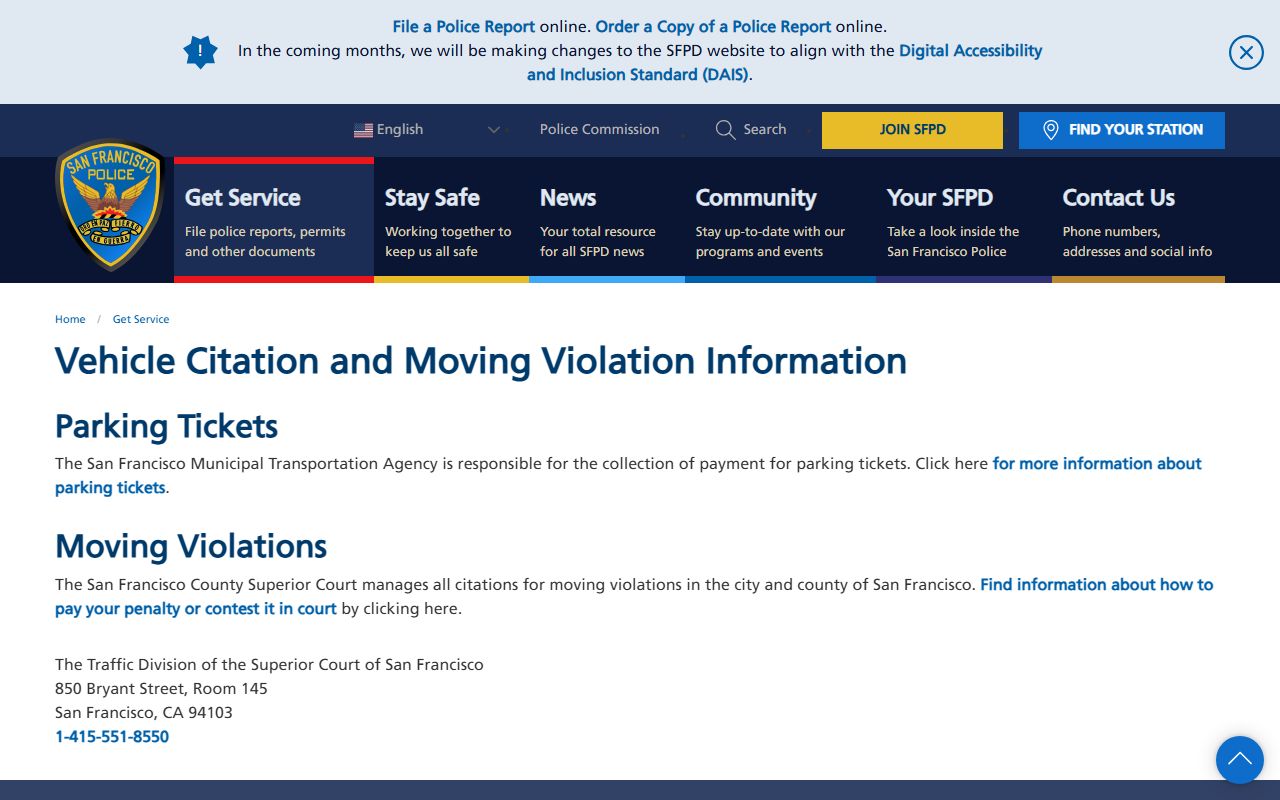
SFPD does not handle payment or court matters. They write the ticket. The court processes it. All questions about bail amounts, due dates, payment plans, or traffic school go to the Superior Court traffic division. The police department can verify that an officer wrote a citation, but they cannot change the ticket or accept payment once it has been filed with the court in San Francisco.
SFMTA Parking Citations
The San Francisco Municipal Transportation Agency issues parking citations and some transit-related violations. SFMTA handles meters, street sweeping, residential permit violations, and other parking infractions. These tickets follow a different process than moving violations. You do not go through Superior Court for parking tickets. You deal directly with SFMTA through their citation processing system.
SFMTA operates a comprehensive online portal for parking citations in San Francisco. You can search for tickets by citation number or license plate. Pay online with a credit or debit card. Request a hearing if you want to contest the citation. Check the status of existing tickets. The SFMTA citation system at sfmta.com citations handles all parking violation matters for the city and county of San Francisco.
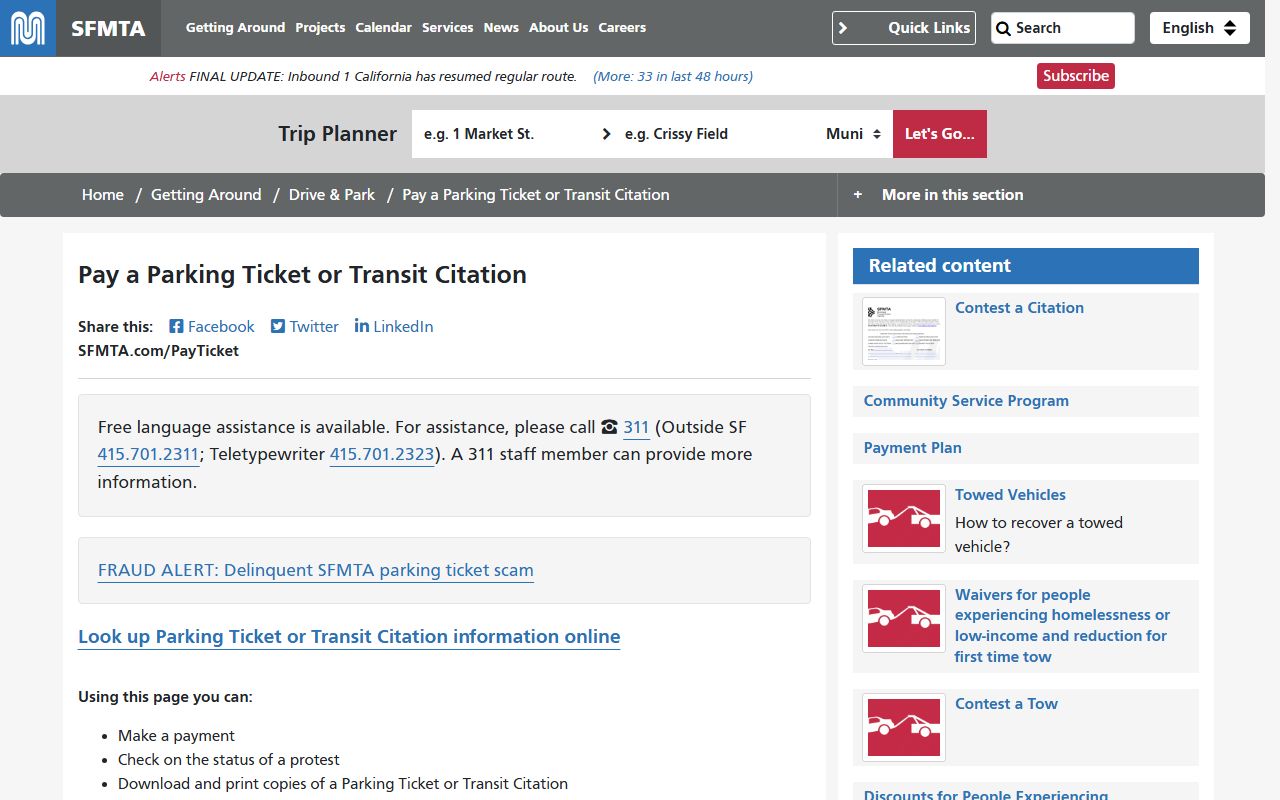
Parking tickets have shorter deadlines than court citations. You typically have 21 days to pay or contest. Late payment adds penalties. The fine increases after 30 days. At 60 days, additional fees apply. After 90 days, SFMTA can boot or tow your car. They can also send the debt to collections. Handle parking tickets quickly to avoid these extra costs and consequences in San Francisco.
You can contest parking tickets online through the SFMTA website. Submit photos and evidence to support your case. An administrative hearing officer reviews your submission and makes a decision. If you disagree with the decision, you can request an in-person hearing. SFMTA hearing officers are independent from the parking enforcement officers who wrote the ticket. They review cases based on the evidence and San Francisco parking regulations.
How to Pay Traffic Tickets
Moving violations go through the court. Pay online at the San Francisco Superior Court website. Mail payment to the address on your citation. Go in person to the traffic clerk window at the Civic Center Courthouse. Court citations accept checks, money orders, and credit cards for payment in San Francisco.
Parking tickets go through SFMTA. Their website takes online payments any time of day or night. You can also pay by phone using the automated system. Mail a check to the address printed on the parking citation. Some payment locations around the city accept walk-in payments during business hours. SFMTA posts a list of these locations on their website for San Francisco residents and visitors.
Paying a moving violation is a guilty plea. The conviction goes on your DMV record. Points may apply. Insurance rates might increase. Think about your options before paying. You might want to request traffic school to mask the point. You could contest the ticket if you think it was issued in error. Once you pay, you give up these options for that San Francisco citation.
If you cannot pay the full amount by the due date, request an extension or payment plan from the court. San Francisco Superior Court allows extensions in many cases. Payment plans let you pay over several months. Some people qualify for fine reductions based on income. Ask the court about these programs before your due date passes to avoid penalties and extra fees.
Traffic School in San Francisco
Traffic school masks one point on your DMV record from insurance companies. You still pay the fine. You pay an extra fee for traffic school. Then you take an approved course. The conviction stays on your DMV record, but insurers cannot see the point. This can save hundreds of dollars in higher premiums over three years.
Not every ticket qualifies for traffic school. You must have a valid California driver license. The violation must be one point. You cannot have attended traffic school in the past 18 months. Commercial drivers have different rules. The court decides if you are eligible. Request traffic school when you respond to your citation or call the court to ask about it for your San Francisco ticket.
Take traffic school from an approved provider. The court maintains a list. Online courses work for most people. In-person classes are also available. Complete the course before your deadline. The school reports your completion to the San Francisco court automatically. Make sure you get confirmation that the court received your certificate before assuming the case is done.
Contesting Traffic Tickets
You have the right to fight your ticket. Request a trial if you think the citation is wrong. San Francisco Superior Court offers trial by written declaration or in-person trial. Written declaration lets you submit your case on paper. The officer submits a written statement too. A judge reviews both and decides. You do not go to court for this option.
In-person trials require you to appear at the courthouse on your assigned date. You present evidence. The officer testifies. The judge hears both sides and makes a ruling. If you win, the ticket gets dismissed. If you lose, you pay the fine. Some people try written declaration first, then request in-person trial if they lose the first round in the San Francisco court system.
Parking citation contests go through SFMTA. Submit evidence online. Include photos, receipts, or documents that support your case. An administrative hearing officer reviews your submission. They decide if the citation should stand or be dismissed. This process is separate from Superior Court and only applies to parking violations issued by SFMTA in San Francisco.
Traffic Tickets and Your DMV Record
After the San Francisco court processes your moving violation, the result gets reported to the California Department of Motor Vehicles. The DMV adds the conviction to your driving record. Most tickets stay on your record for three years. Serious violations like DUI remain for ten years. The DMV uses a point system. Too many points lead to license suspension.
You can check your DMV record online at any time. The official record costs two dollars if you request it through the DMV website. You need to create an account. The record shows all convictions, accidents, and points on your California driver license. Employers, insurance companies, and courts accept this official DMV record as proof of your driving history in the state.
Parking tickets do not go on your DMV record. They are administrative matters handled by the city. Only moving violations reported by the court show up on your DMV driving record. Parking tickets can affect your vehicle registration if left unpaid, but they do not add points or show up when insurance companies check your license in San Francisco or anywhere else in California.
San Francisco Traffic Resources
San Francisco provides multiple resources for drivers dealing with traffic citations. The city operates public transportation options that can help you get around while handling a suspended license. Legal aid groups offer help to low-income residents facing serious traffic matters. The public library has computers and internet access if you need to search for tickets or pay online but lack home internet access in the city.
The California Courts self-help website offers detailed information about traffic violations statewide. They explain your rights, court procedures, and what to expect at each step. This resource helps people across California, including San Francisco residents, understand how to handle traffic citations without hiring a lawyer for routine matters.
Some traffic tickets become criminal matters. Driving on a suspended license, DUI, reckless driving, and hit-and-run are misdemeanors or felonies. These cases need legal help. The San Francisco Public Defender can represent you if you cannot afford a lawyer. The Bar Association of San Francisco offers referrals to private traffic attorneys. Many lawyers provide free consultations to discuss your case before you decide to hire them.
Nearby Cities
San Francisco is surrounded by water on three sides and shares its southern border with San Mateo County. If you got a ticket near the county line, make sure you know which county court to contact. Each county runs its own system. A ticket issued in San Francisco goes through San Francisco County Superior Court. A ticket in Daly City goes through San Mateo County Superior Court even though the cities are right next to each other.
Nearby cities with populations over 100,000 include:
Check your citation paperwork to see which court has authority. The issuing agency and location determine jurisdiction. California Highway Patrol tickets often go through the county where the violation occurred. City police department tickets go through that county's court system. Make sure you respond to the correct court to avoid missed deadlines and extra penalties.
San Francisco County Court
San Francisco is unique in California as a consolidated city and county. The Superior Court of California, County of San Francisco, handles all court matters for the entire jurisdiction. Traffic cases for the city of San Francisco are the same as traffic cases for San Francisco County. There is no separate county court system because the city and county are one entity under California law.
For more information about the San Francisco County court system and traffic procedures, visit the San Francisco County traffic ticket records page for comprehensive details about court locations, filing procedures, and local resources available throughout the jurisdiction.